


Pollen In Love With Pollinators? How Pollinators Have Shaped Our Planet & Region
We share planet Earth with a complex and vibrant interconnected framework of biodiversity and ecosystem functions. Without which, life on this planet would cease to exist. One of the most prolific and important of these is pollinators and the imperative role they play in keeping flora alive, ecosystems functioning, and food abundant. Pollination is planet Earth's primary survival function, maintaining its status as the backbone of Earth’s terrestrial ecosystems. From the ecosystem services pollination provides on a global scale, the benefits specific pollinators bring regionally to New England, all the way to the localized value it brings to small farms and gardens, pollination is foundational on multiple scales.

When we narrow it down to the benefits pollination brings to us on an anthropogenic scale, we can easily quantify it through ecosystem services. Pollination, at its core, is a regulating service as it serves a function to keep life and human survival sustainable. The next biggest service is the provisioning services we gain from direct products, such as food! Out of every single crop plant grown across the world, 80% of them rely on pollination to produce grains, nuts, oils, fruits, vegetables, etc. While the service pollinators provide well exceeds monetary value, economically, the services are worth more than three trillion dollars on a global scale (USDA, Forest Service). This doesn't even begin to include the cultural and aesthetic ecosystem services it brings to humanity. From significant cultural symbols in religion, spiritual practices, imagery, art, etc., it’s not hard to find an example of how pollinators have shaped humanity's life experiences around the world. A notable example is the symbol of the butterfly, or Polik-mana (Butterfly Maiden), who represents “earth's fertility” in Hopi Native American culture. This is celebrated through a traditional initiation dance for Hopi girls to represent their dance from flower to flower, bringing life to the Arizona Desert (Fewkes, Walter. The Butterfly in Hopi Myth and Ritual. 1910). We also cannot deny the aesthetic value that both pollinators and the plants they pollinate bring to our world. From every vibrant, colorful flower to the patterns on butterflies and bees, pollination is core to so much of what inspires us. Even the pollinators that are not typically considered “aesthetic” in the same way, the wonder and curiosity we exhibit are still just as formative when a fruit bat flies through the dusk sky in the tropics or a beetle scurries across a flower.
The fascinating aspect of pollination is that pollinators don’t necessarily know they're doing it! Pollinators are simply carrying out an instinctual search for food. As this food source is primarily nectar and pollen, the pollinators will, by proximity, brush against the reproductive parts of a flower. This movement deposits pollen that the pollinators collected from another flower into the reproductive parts, producing a fruit or seed. Over 80% of Earth’s crops have evolved to rely on pollinators for reproduction and genetic diversity.
Globally, it is all too evident how important pollinators are. What about here in New England? Or even here in New Hampshire. While the same services still exist here, there are also regional benefits that we thank our local pollinators for.

New Hampshire is home to over two hundred species of native bees, over four thousand species of moths, over one hundred and thirteen species of butterflies, thousands of beetles, flies, and wasps. New Hampshire also hosts the notorious Ruby-throated Hummingbird, a specialized pollinator bird species. All of which are imperative to the local New England food system and the regional specialized crops (UNH Extension, Pollinator Brochure):
New England and New Hampshire are known for their apples. People will travel from all over the country to pick apples and drink freshly pressed apple cider. This crop wouldn’t be possible without the native honey bees, mason bees, and bumble bees that pollinate the apple blossoms.
Berries are a cornerstone of New England. From blueberries, raspberries, blackberries to strawberries, New England wouldn’t be the same without its sweet and delicious berries. All of which are reliant on wild bees and honey bees for pollination. Raspberries and blackberries are reliant on bees and types of beetles for pollination.
Squash and pumpkins are unique as they require specialist pollinators such as the native squash bee and other local insects.
Threats to Pollinators
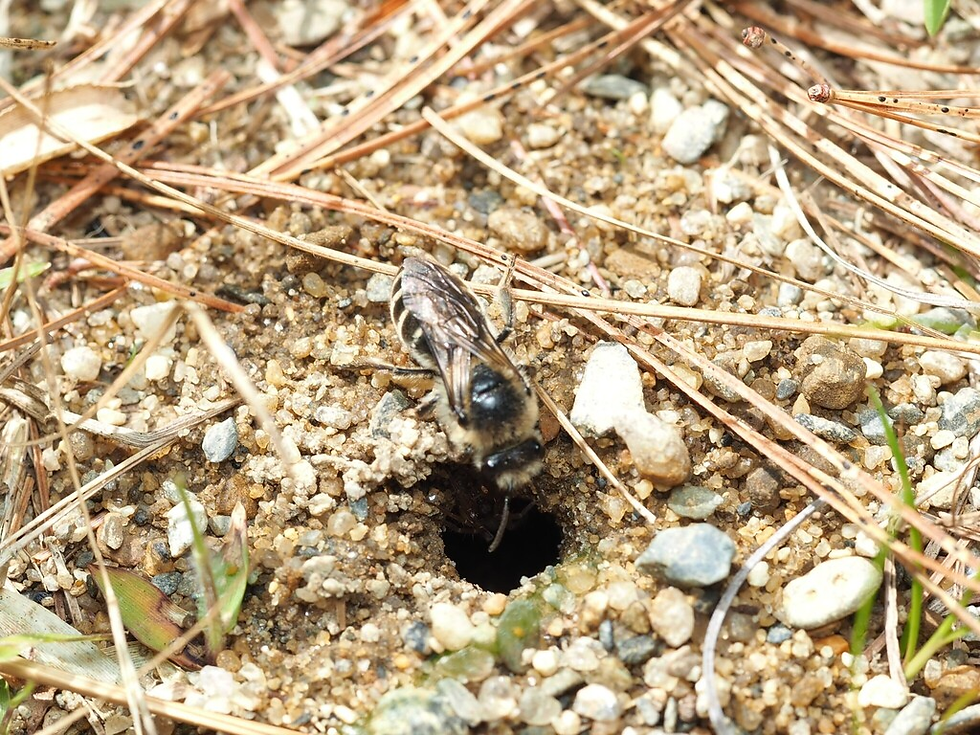
We have all seen the infamous tag line “Save the Bees”! This exists as a direct reaction to the challenges bees and other pollinators on our planet are facing. Species all over the world are declining as a result of biodiversity loss, habitat loss, pesticide use, environmental contamination, and the overall climate impacts of climate change. In New Hampshire specifically, a recent study at the University of New Hampshire found evidence of the decline of fourteen different wild bee species. These species are imperative for the pollination of New England cornerstone crops mentioned above (apples, blueberries, etc). This study used local museum records and compared changes in wild bee populations over a 125-year time span. Several factors were taken into consideration, including social behavior, habitat, elevation, and latitude. Many of the wild bee populations within New Hampshire are ground nesters, which plays an important role in the success of this species. Thirteen of the wild bees in this study were ground nesters, and one was a cavity nester. This study also noted a shift in the impacts of habitat and location in relation to climate change and how that impacted the success of the wild bee populations. Bees found near sea level in New Hampshire were declining much faster than those in the White Mountains (UNH, 2019).
Pollinator Conservation
How do we work to support and conserve our pollinators? The simple and broad answer is working to conserve their local habitats, supporting education around pesticide use, and planting or supporting native and pollinator-friendly plants in your area.
More specifically, the way you can best support local pollinators depends on who you are and the way you live. Whether you’re a gardener or own a landscaped yard, there are so many amazing practices you can utilize at your home. Prioritizing a mixture of native, pollinator-friendly plants, shrubs, and trees in your garden or landscape. We are also very fortunate to live in a time with an abundance of research on pest control and natural management methods. Do your research on ways to reduce or eliminate pesticide use. The way you manage pollinator habitat is also crucial. A big part of that is accepting the very natural plant damage that comes as a result of moth or butterfly larvae. Leaving dead tree trunks for wood nesting beetles is also a great mechanism for supporting habitat.

For farmers, native bee species are imperative for increasing crop yields and serve as a crucial insurance for farmers in securing their crops. This means farmers could greatly benefit by supporting these native pollinators by searching and identifying areas on their land that can support bees, specifically areas that are geared towards bumble bees, digger bees, and sweat bees. Identifying flowering plants and nest sites on your land can also help farmers limit pesticide use or disturbance around those areas. These areas are recommended to remain untilled and have flowers planted. These areas can also be amended with dried twigs, debris, dead trees, and branches (USDA, NRCS, NH Pollinators). Farmers can learn more about pollinator practices and grant opportunities by contacting their local NRCS office!
An opportunity to support pollinators here in Cheshire County is learning more and applying to the Conservation Opportunity Fund. This grant provides funding for owners or stewards of small tracts of land who are interested in improving the wildlife habitat and pollinators on their property. This program is an annual opportunity to support environmental stewardship and the ecological integrity of Cheshire County, NH
Pollinator Week
Regardless of who you are or where you live, we can all work together to support land conservation by working to create and maintain community gardens and natural spaces. More than ever, pollinators need our help in being the voice for advocacy, education, and support. A great opportunity to get involved is in the internationally held annual Pollinator Week, from June 22nd to 28th, 2026! Celebrate Pollinator Week with the Cheshire County Conservation District at this year's Pollinator Palooza. The event will take place on Saturday, June 27th, from 11am to 2pm in Ashuelot River Park in Keene. Learn more here, Pollinator Palooza!

Like many of you, loving this planet, nature, and pollinators isn’t always easy. While the current threats to pollinators can be alarming, it is important to remember that as a world and region, the work we do at the grassroots has more impact than we could ever imagine. It’s also important to celebrate and honor the pollinators we love whenever the opportunity presents itself! And with that, please enjoy some hilarious and informative fun facts on pollinators!
Pollinator Fun Facts!
Butterflies and bees both pollinate the same way, but butterflies can’t pick up as much pollen due to their more slender bodies.
The Midge Fly is one of the specialized pollinators for the cocoa tree! Who would've thought that a tiny fly is one of the reasons we can eat chocolate!
A species of fly called a midge is one of the pollinators of the cocoa tree. Yup! These flies help give us yummy chocolate!
The rapid flapping of a bee's wings builds a positive static electrical charge, helping attract pollen grains that are negatively charged.
The first queen bee to pupate will make a noise called “piping”. This noise will alarm the other queen bee larvae, and they will make a “quacking” sound. The “piping” queen bee will then fight her sisters to the death.
Believe it or not, the Black and White Ruffed Lemur is the largest pollinator in the world
The black-and-white ruffed lemur is the largest pollinator in the world! By using their long snouts and hands, they will open up large flowers to lap up the nectar. Pollen sticks to their snout and fur, pollinating the next flower it eats.
In tropical areas and deserts, bats are perhaps the most crucial pollinators! They are responsible for pollinating over three hundred fruits worldwide.
Bats are important pollinators in tropical places and deserts. They are responsible for pollinating over 300 fruits, including mangoes, bananas, and guavas.
Moths, unlike butterflies, will continue to pollinate after the sun goes down.


Comments